Fuller Law Firm
408-234-7563
79 Devine Street, Suite 100, San Jose, CA 95110
 408-234-7563


Blog
408-234-7563
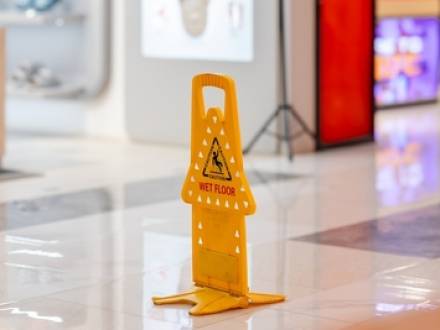 A property owner is generally liable for a slip-and-fall accident under certain conditions. They must have known or reasonably should have known about a dangerous condition. They must have failed to fix it or warn visitors. This failure must have directly caused your injury. Not every fall results in a valid legal claim.
If you were injured in a fall in 2026, our Santa Clara County, CA premises liability lawyer can help you understand whether the property owner may be responsible. Attorney Fuller believes everyone deserves legal representation that will give them a voice in this complex system.
Under California Civil Code Section 1714, property owners generally have a duty to use reasonable care in managing their property. This includes taking reasonable steps to keep the property safe.
If a dangerous condition was created by someone else, you may need to show that the property owner knew about it or should have discovered it through reasonable care. If the owner or its employees created the dangerous condition, the owner may be treated as having knowledge of it. You must also show that the owner's failure to use reasonable care was a substantial factor in causing your injury.
Actual knowledge means the property owner was directly aware of the hazard. An example is an employee who saw a spill but didn't clean it up. Constructive knowledge means the hazard existed long enough that a reasonably careful property owner should have discovered and addressed it. This applies even if no one specifically reported seeing it.
This distinction matters significantly in slip-and-fall cases. Proving how long a hazard existed before your fall often becomes central to establishing the property owner's liability.
A few types of evidence can help show how long a hazard was there. This includes surveillance footage, witness statements about the hazard's condition, and maintenance logs showing when the area was last inspected. The longer a hazard sat there without being fixed, the stronger the case gets. It suggests the property owner should have found and fixed it through reasonable inspections.
Several common hazards frequently result in slip-and-fall accidents on both commercial and residential properties. Common examples include wet or recently mopped floors without warning signs, and uneven or cracked walkways. Poor lighting in stairwells or parking areas is another common example, along with loose or torn carpeting.
Weather-related hazards, such as ice or snow that wasn't properly cleared, can also form the basis of a valid claim. This is particularly true if the property owner had reasonable time to address the condition before your accident occurred.
California follows a comparative negligence system. This means you can still recover compensation even if you were partially responsible for your fall. Your compensation would be reduced by your percentage of fault, though. Even a fall involving some level of inattention on your part doesn't automatically prevent you from pursuing a claim against a negligent property owner.
Building a strong slip-and-fall case requires gathering specific evidence supporting your version of events. Helpful evidence includes:
Gathering this evidence quickly matters. Hazards like spills or debris often get cleaned up shortly after an accident, making it harder to prove the condition existed as you described.
California generally requires personal injury claims to be filed within two years of the date of the accident, under California Code of Civil Procedure Section 335.1. Missing this deadline can mean losing your right to pursue compensation entirely, even in cases involving clear property owner negligence.
You may be able to recover compensation for medical expenses if your claim is successful. You may also recover lost wages if your injury kept you from working. Pain and suffering related to the accident is another form of compensation.
Compensation may also account for long-term care needs and reduced quality of life going forward in cases involving serious or permanent injuries.
Slip-and-fall claims can be challenging to prove. However, an experienced attorney can help you understand the laws as they apply to your case and ensure you ask for every available loss you can recover.
Born and raised in Santa Clara County, Attorney Cory Lee Fuller chose to stay local and serve the community he grew up in, bringing a genuine understanding of the area to every case he handles. He works closely with clients to build strong cases against negligent property owners throughout the community he calls home.
Contact Fuller Law Firm at 408-234-7563 to talk to our Santa Clara County premises liability lawyer today.
408-234-7563From our office in San Jose, California, we serve clients throughout the Bay Area, including but not limited to Campbell, Los Gatos, Cupertino, Santa Clara, Sunnyvale, Gilroy, Morgan Hill, Los Altos, Palo Alto, Saratoga, Milpitas, Mountain View, Fremont, Stanford, Union City, and Santa Clara County.


 The use of the Internet or this form for communication with the firm or any individual member of the firm does not establish an attorney-client relationship. Confidential or time-sensitive information should not be sent through this form.
I have read and understand the Disclaimer and Privacy Policy.