Fuller Law Firm
408-234-7563
79 Devine Street, Suite 100, San Jose, CA 95110
 408-234-7563


Blog
408-234-7563
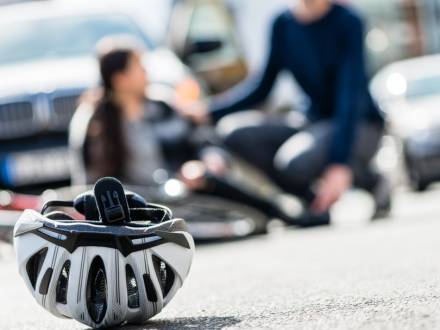
A cyclist can be at fault in California when they break a traffic law or ride carelessly and that behavior helps cause an accident. That said, fault is rarely all-or-nothing. California follows a rule called pure comparative negligence. This means an injured cyclist can still receive compensation even if they were mostly at fault. Their compensation is reduced by their share of responsibility. Their percentage of fault reduces their award. If you have questions about your role in a bicycle accident in 2026, our Gilroy, CA personal injury lawyer can evaluate how fault is likely to be divided in your situation.
California Vehicle Code § 21200 generally gives cyclists the same rights and responsibilities as drivers when riding on public roads. That includes obeying traffic signals, stopping at signs, riding with traffic, and yielding when required.
Cyclists riding slower than traffic must use an available bike lane unless an exception applies. Without a bike lane, they must stay near the right edge of the road unless there is a reason to move away. But they can move out to pass, prepare for a turn, avoid hazards, or use a lane too narrow to share safely. Riding outside a bike lane is not automatically illegal.
At night, cyclists need a white front light visible from 300 feet, along with required rear and side visibility equipment. A 2026 change requires electric bicycles to have a qualifying rear reflector or light even during daylight. Riders under 18 must wear a helmet. Adults riding standard bicycles are not required to wear one, and riding without a helmet does not itself cause a collision.
These behaviors can make a cyclist partly responsible for a collision:
Riding against traffic
Running a stop sign or red light
Entering traffic suddenly without checking for approaching vehicles
Leaving a bike lane without looking or signaling when needed
Riding after dark without required lights or reflectors
Making an unsafe pass near an intersection
Riding while impaired or wearing headphones covering both ears
Wrong-way riding can surprise drivers at intersections and driveways, where they expect traffic from another direction. However, a cyclist's mistake does not eliminate a driver's duty of care. Sidewalk cycling is not banned statewide, though cities can restrict it.
Drivers carry obligations of their own. This includes leaving enough room to pass safely and checking for bicycles before turning or opening doors.
Under California law, drivers must leave at least three feet when passing. They also have to change lanes when another same-direction lane is available, and the move is safe, practical, and legal. Otherwise, they need to slow down and pass only when safe.
Drivers can enter a bicycle lane to prepare for a turn within 200 feet of an intersection. But they need to check for cyclists and merge safely. A right hook occurs when a driver turns right across a cyclist's path. A left cross occurs when a driver turning left cuts across an oncoming cyclist. The evidence determines who failed to yield or take reasonable care.
Physical evidence can help clarify conflicting accounts. Helmet cameras, dashcams, traffic cameras, and nearby business or doorbell footage establish the sequence. Request recordings quickly because some systems overwrite them.
Photos of skid marks, vehicle damage, road markings, and the bicycle's position help reconstruct the collision. Witnesses, medical records, and police reports also matter, but officers do not decide civil fault.
In California, you usually have two years from the date of your injury to file a personal injury lawsuit. If a government agency is responsible, such as a city that failed to address a dangerous road, you usually must file a claim with that agency within six months of the injury.
Born and raised in Santa Clara County, Attorney Cory Fuller attended Bellarmine and Santa Clara University. He stayed local to serve the community he grew up in. He believes every client and their family deserves someone to give them a voice in a system that is difficult to navigate alone. Every case is different, but most families want the same thing, which is a way to get back on their feet with someone who believes in them and will handle the process on their behalf.
Contact Fuller Law Firm at 408-234-7563 to talk to our Gilroy, CA personal injury lawyer today.
408-234-7563From our office in San Jose, California, we serve clients throughout the Bay Area, including but not limited to Campbell, Los Gatos, Cupertino, Santa Clara, Sunnyvale, Gilroy, Morgan Hill, Los Altos, Palo Alto, Saratoga, Milpitas, Mountain View, Fremont, Stanford, Union City, and Santa Clara County.


 The use of the Internet or this form for communication with the firm or any individual member of the firm does not establish an attorney-client relationship. Confidential or time-sensitive information should not be sent through this form.
I have read and understand the Disclaimer and Privacy Policy.